The past few years have marked a period of unprecedented investor interest in artificial intelligence (AI). Following the rapid advancement of generative models, tens of billions of dollars have been invested in AI developers, chip manufacturers, and cloud infrastructure providers. However, as the market begins to search for the next growth drivers, attention is increasingly shifting from digital AI to its physical embodiment.
The world’s largest technology companies view the next stage of the industry’s evolution as so-called Physical AI — artificial intelligence systems capable not only of analyzing information but also of interacting with the real world through robots, autonomous vehicles, drones, and intelligent manufacturing systems. Nvidia CEO Jensen Huang has described Physical AI as “the next wave of AI” and believes that this field will form the foundation of a new cycle of growth in robotics and automation.
Autonomous transportation, robotics, and intelligent automation could become some of the most important investment themes of the coming decade. Although the industry is still in the early stages of commercialization, a number of publicly traded companies are already well positioned to benefit from this long-term trend. In this article, we will explore some of the most compelling investment opportunities within the Physical AI ecosystem.
Humanoid robots
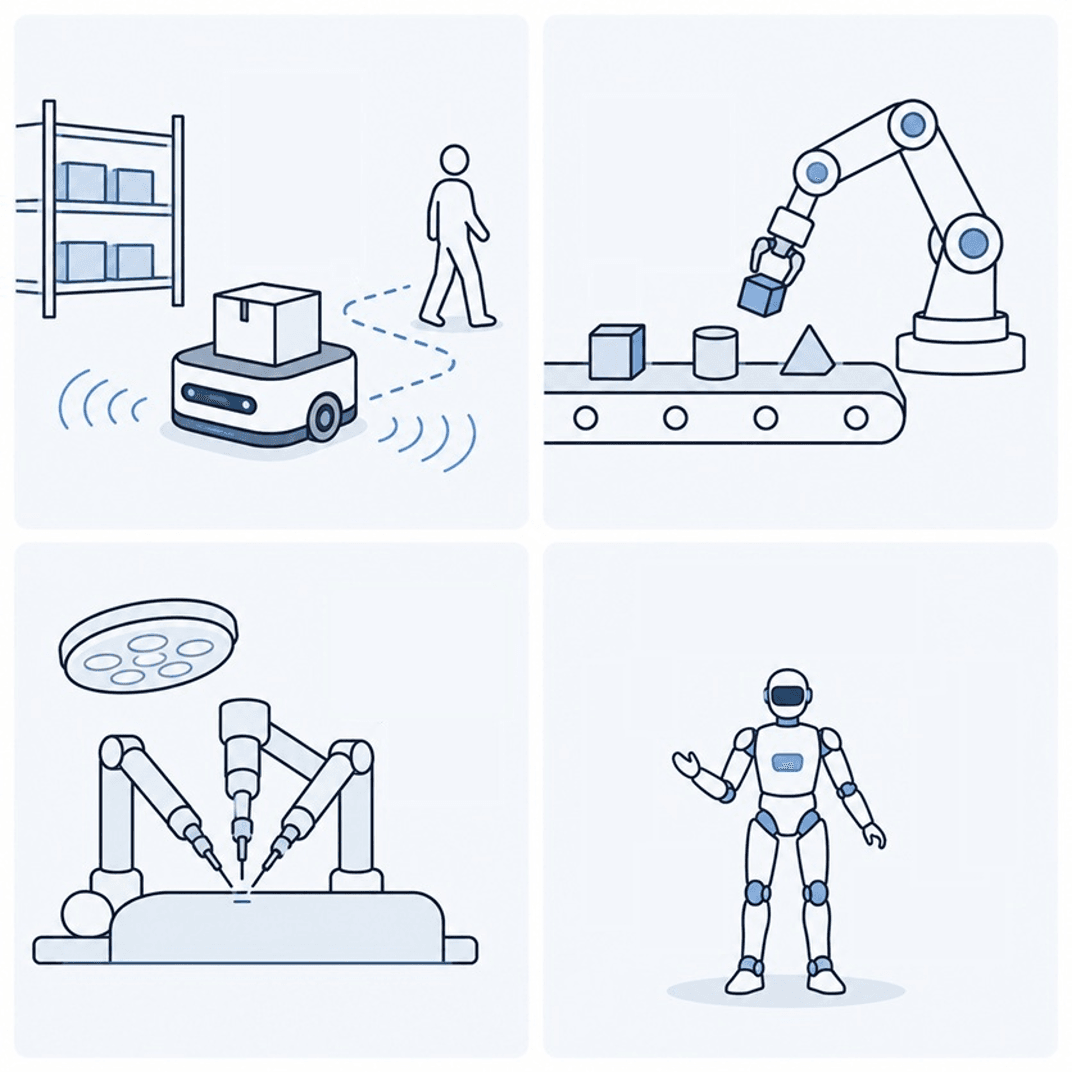
Over the past two years, the humanoid robotics market has emerged as a major focus for investors and leading technology companies. While robots were previously capable of performing only pre-programmed tasks, modern AI models now enable them to perceive their surroundings, understand natural-language instructions, adapt to new situations, and make decisions autonomously.
Another key driver of the industry’s growth is the labor shortage across manufacturing, logistics, and elderly care. Humanoid robots have the potential to partially offset workforce shortages by taking on tasks in factories and caregiving environments.
The development of the humanoid robotics market is also being supported by declining robot costs—both in terms of upfront purchase prices and ongoing operating and maintenance expenses as technologies continue to improve. The total cost of deploying a robot is increasingly approaching the annual cost of a manufacturing worker in the United States when wages, benefits, and social contributions are taken into account.
Against this backdrop, major technology companies are investing heavily in robotics. Nvidia is developing its Isaac and GR00T platforms for robot training, Google DeepMind has introduced Gemini Robotics, Microsoft has invested in Figure AI, and Tesla is advancing its Optimus project. An increasing number of industry participants view humanoid robots as the next stage in the evolution of artificial intelligence—a transition from digital assistants to systems capable of performing physical work in the real world. Among the most prominent private companies in this space today are Figure AI, Unitree Robotics, and Apptronik.
Public markets also offer exposure to this trend through several listed companies that specialize in humanoid robotics, providing investors with an opportunity to participate in the sector’s long-term growth.
UBTech Robotics
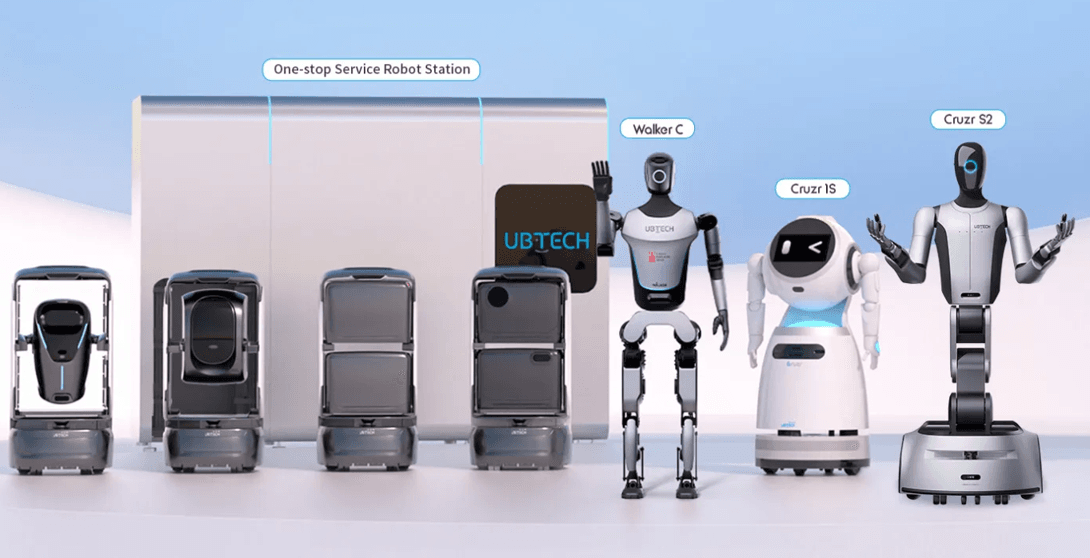
UBTech Robotics (9880 HK) is a Chinese robotics and artificial intelligence company specializing in the development of humanoid robots, service robots, and AI-driven solutions for industrial and logistics applications. Today, UBTech’s core business is centered around its full-sized Walker series of humanoid robots, designed to automate manufacturing processes in factories and logistics centers. The company is also developing its proprietary BrainNet technology platform, which integrates vision-language-action algorithms, autonomous control systems, and multi-robot coordination capabilities. UBTech collaborates with several leading industrial companies, including BYD, Foxconn, Geely Auto, FAW-Volkswagen, Audi FAW, BAIC New Energy, and SF Express. The launch of its consumer-focused humanoid robot brand, UWORLD, further suggests that the company is exploring demand beyond industrial applications and positioning itself to capture opportunities in the household robotics market.
Potential catalysts for the stock include increasing orders for the Walker series and the launch of new robot models, declining production costs, manufacturing scale-up initiatives in partnership with Siemens, continued expansion of the service and AI robotics markets, and ongoing policy and strategic support from the Chinese government. Humanoid robotics has become an important component of the broader technological competition between China and the United States, while demand from automotive manufacturers, logistics providers, and government-backed projects is helping to accelerate adoption.
Key risks include slower-than-expected commercialization of humanoid robots, intensifying competition from Unitree and other industry players, and the company’s dependence on critical components and Nvidia chips.
Shenzhen Dobot Corp
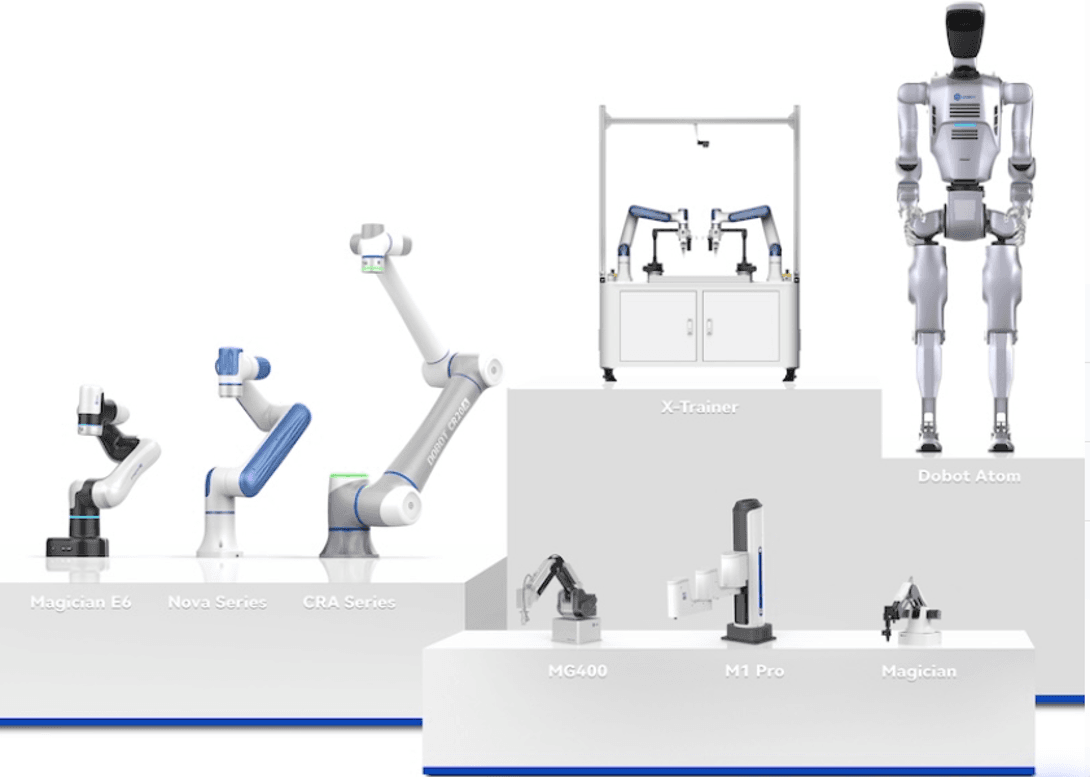
DOBOT (2432 HK) is a Chinese robotics company. The company initially gained recognition for its desktop robotic manipulators used in education and research, but later evolved into one of the world's leading manufacturers of collaborative robots (cobots)—robots designed to work safely alongside humans without the need for protective barriers. Today, DOBOT develops and manufactures collaborative robots, industrial robotic arms, humanoid robots, dual-arm robotic systems, and quadruped robots.
DOBOT's solutions are used across a wide range of industries, including automotive manufacturing, electronics, battery production, healthcare, scientific research, and education. According to the company, its robots are deployed by more than 80 Fortune Global 500 companies.
In recent years, DOBOT has invested heavily in developing a unified software architecture known as “One Brain, Multiple Bodies,” under which a single AI model can simultaneously power humanoid robots, wheeled robots, dual-arm systems, and quadruped platforms. Management believes this approach accelerates robot training, enables the reuse of algorithms across different hardware platforms, and reduces the cost of developing new robotic systems.
In 2025, DOBOT introduced its first full-sized humanoid robot, Atom, and immediately launched mass production and international shipments. By early 2026, the company had already delivered the third global batch of the model. Atom features five-fingered robotic hands and is designed primarily for industrial applications, particularly in manufacturing and logistics environments.
The investment risks associated with DOBOT are broadly similar to those of UBTech. The humanoid robotics market remains at an early stage of commercialization, meaning actual adoption rates could fall short of both company and investor expectations. Additional risks include intense competitive pressure and the need to maintain high research and development spending, which could delay the company's path to sustainable profitability.
Some robotics companies are not yet publicly listed but are IPO candidates or have already filed for public offerings. Notable examples include Unitree Robotics, Leju Robotics, and Deep Robotics. These companies are also worth monitoring closely, as they may provide attractive opportunities for investors seeking exposure to the robotics sector as it continues to develop.
There is a strong industrial and technological synergy between electric vehicle manufacturing and humanoid robotics. This is why companies such as Tesla (TSLA US), BYD (1211 HK), XPeng (9868 HK, XPEV US), Xiaomi (1810 HK), and Hyundai are actively exploring the sector and have already begun developing their own robotics initiatives.
First, electric vehicles and humanoid robots rely on a highly similar set of core components. Electric motors, power electronics, batteries, power management systems, sensors, cameras, computing platforms, and software for autonomous decision-making are essential to both vehicles and robots. Many of the most expensive components used in humanoid robots overlap with the electric vehicle supply chain. As a result, EV manufacturers can leverage their existing production capabilities and supplier networks to develop robots, significantly reducing development costs and accelerating scalability.
Second, modern humanoids are essentially another form of physical artificial intelligence. Many autonomous driving technologies can be directly transferred to robotics, including computer vision, object recognition, environmental mapping, motion planning, and real-time decision-making.
For EV manufacturers, robotics also represents an attractive new market. Humanoid robots can be deployed within a company's own factories while also being sold to industrial enterprises, logistics operators, and, eventually, households. Some industry participants believe that, over the long term, the humanoid robotics market could become comparable to—or even larger than—the global automotive market.
Autonomous driving technologies
Autonomous driving technologies represent one of the most mature and commercially advanced segments of the Physical AI market. Over the past decade, the autonomous transportation industry has developed many of the core technologies that are now being applied across robotics, including computer vision, spatial understanding of the environment, world modeling, decision-making under uncertainty, and simulation-based training.
Below, we examine several publicly traded companies operating in this sector that may offer investors exposure to the long-term growth of autonomous driving and Physical AI.
Horizon Robotics
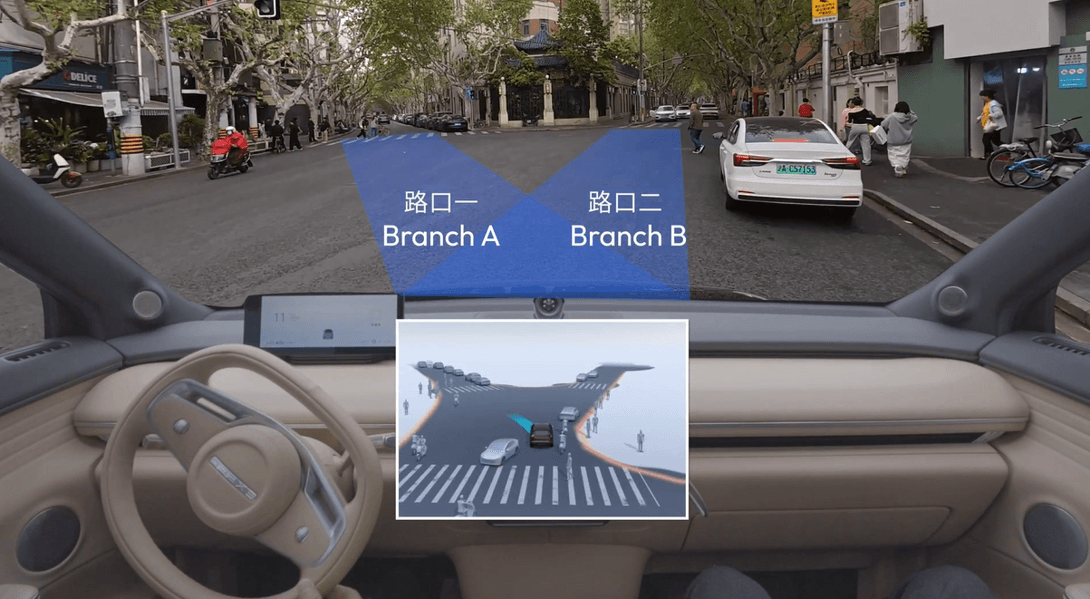
Horizon Robotics (9660 HK) is one of China's leading developers of AI chips and software for intelligent driving systems. The company designs both its proprietary Journey series processors and integrated solutions for advanced driver-assistance systems (ADAS), Navigation on Autopilot (NOA), and autonomous driving applications. Horizon is gradually shifting its focus from basic ADAS solutions toward more advanced and higher-value autonomous driving platforms, supporting growth in average revenue per vehicle.
An additional growth driver is the development of the company's Agentic CAR platform, which integrates intelligent driving and in-vehicle intelligence into a unified AI architecture. This platform has the potential to serve as the foundation for a new generation of AI-powered vehicles featuring autonomous agents. Horizon also views its technology stack as a building block for future robotaxi services and other Physical AI applications, with pilot robotaxi deployments planned as early as 2026. Further upside could come from international expansion and continued diversification of the company's product portfolio.
At the same time, the investment case remains high-risk. Horizon faces competition from major players such as Nvidia, Huawei, Mobileye, and Qualcomm, as well as from automakers developing their own in-house autonomous driving solutions. The company continues to invest heavily in research and development and remains unprofitable, relying on future economies of scale to achieve profitability. Additional risks include potential delays in the commercialization of new products, dependence on the global semiconductor supply chain, and the possibility of tighter US export restrictions targeting China's AI sector.
Hesai Group
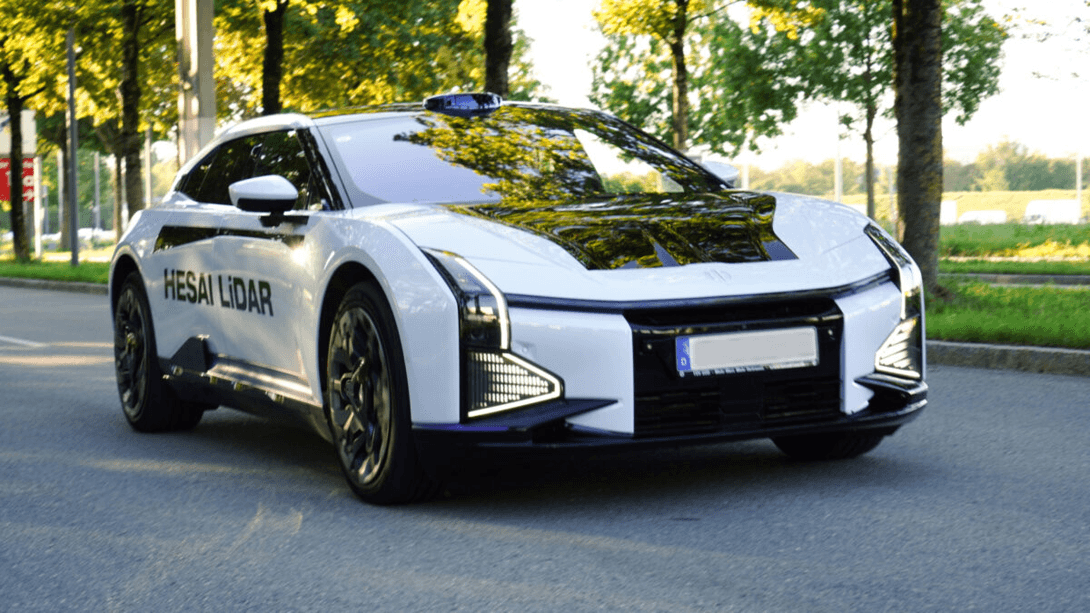
Hesai Group (HSAI US, 2525 HK) is a global leader in lidar technology, developing high-precision laser sensors for advanced driver-assistance systems (ADAS), autonomous driving, and robotics applications. In 2025, the company achieved profitability for the first time, driven by more than a threefold increase in shipments. The primary growth catalyst remains the rapid adoption of Level 2+ and Level 3 autonomous driving systems, particularly in China, where lidar is increasingly becoming a standard component not only in premium vehicles but also in mass-market models.
The company is developing a new generation of lidar sensors based on its proprietary Picasso chip, which combines spatial and color perception to improve object recognition capabilities for autonomous driving systems. At the same time, Hesai is expanding into the broader Physical AI ecosystem through its Kosmo spatial intelligence platform, which is designed to generate three-dimensional data and train AI models. The company is also exploring opportunities in the market for robotic actuators. International expansion, including partnerships with Mercedes-Benz and GAC Toyota, further demonstrates the competitiveness of Hesai's technology on a global scale.
Key risks for Hesai include intensifying competition, slower-than-expected adoption of autonomous driving technologies, and continued high research and development expenditures. In addition, some automakers—most notably Tesla—are pursuing autonomous driving systems that rely more heavily on cameras and artificial intelligence than on lidar sensors. If this approach gains widespread acceptance, demand for lidar technology could grow more slowly than the market currently anticipates.
Physical AI in Healthcare
One of the most mature applications of Physical AI today is healthcare. Unlike humanoid robots, which are still at an early stage of commercialization, robotic surgical systems are already widely deployed in hospitals around the world and assist in millions of procedures each year. These platforms combine computer vision, sensors, software, and robotic manipulators, enabling surgeons to perform operations with greater precision, control, and consistency.
Intuitive Surgical
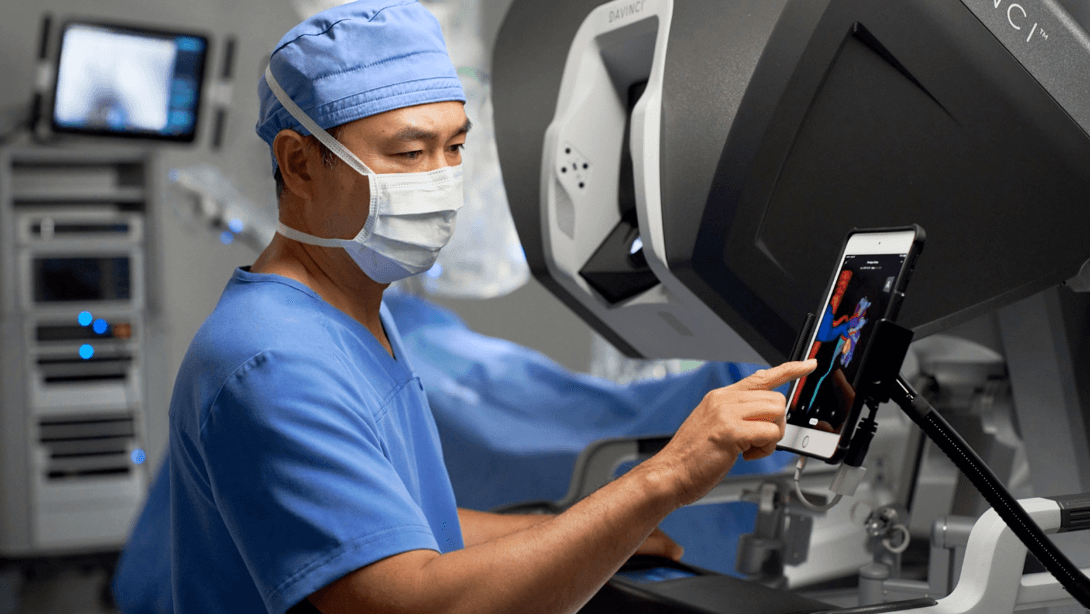
Intuitive Surgical (ISRG) is the global leader in robotic surgery and the developer of the da Vinci platform, which is widely used for minimally invasive procedures in urology, gynecology, general surgery, and other medical specialties. The company’s installed base exceeds 11,000 systems worldwide. The primary growth drivers for Intuitive Surgical include the increasing number of procedures performed using da Vinci systems, continued growth in the installed base of robotic platforms, and expansion into new areas such as the Ion platform for robotic-assisted lung diagnostics.
Another important long-term growth catalyst is the integration of artificial intelligence. The company plans to leverage data generated from millions of surgical procedures to develop surgeon-support tools, improve hospital efficiency, and further enhance its robotic surgical systems.
A key risk is the growing use of remanufactured instruments produced by third-party companies, which are offered at lower prices than Intuitive's original products and could slow growth in the company's highly profitable Instruments & Accessories segment. Additional risks include intensifying competition from Medtronic (Hugo), CMR Surgical, and Chinese robotic surgery manufacturers that are gradually expanding into international markets. The company may also face headwinds from hospital budget constraints, slower adoption of new robotic systems, and regulatory changes in certain markets, including China.
Medtronic
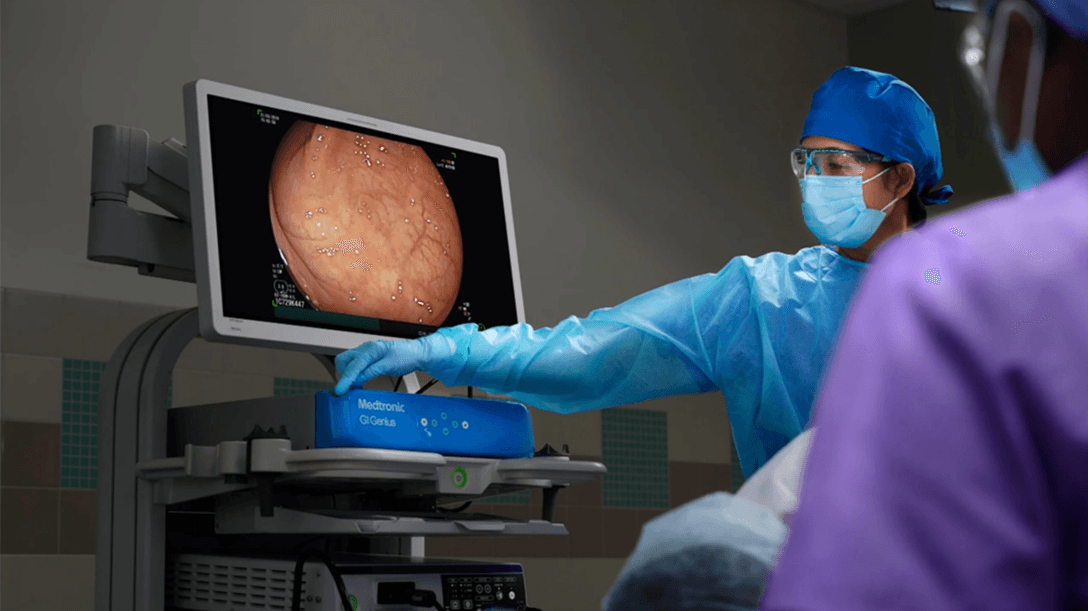
Medtronic (MDT US) is one of the world's largest manufacturers of medical devices and technologies for the treatment of chronic diseases. The company operates across cardiovascular care, surgical technologies, neuroscience, and diabetes management, and its investment thesis is largely centered on its strong position in several fast-growing markets, including medical robotics, cardiac arrhythmia treatment, and hypertension management.
The key growth drivers for Medtronic include the rapid expansion of its cardiac rhythm management business, increasing adoption of its new therapy for severe hypertension, and the continued development of its Hugo robotic-assisted surgery platform. Additional support comes from new product launches in neurosurgery, cardiology, and minimally invasive surgery, as well as long-term demographic trends such as population aging and rising demand for advanced healthcare technologies.
At the same time, Medtronic continues to allocate a significant portion of its revenue toward research, development, and new product investments. Key risks include intense competition from companies such as Intuitive Surgical, Abbott, Boston Scientific, and Johnson & Johnson, slower adoption of new technologies than the market currently expects, and uncertainty surrounding the commercial success of both the Hugo platform and the company's renal denervation (RDN) therapy. Additional risk factors include margin pressure from tariffs and higher operating costs, as well as the ongoing separation of the company's diabetes business into an independent entity.
Stryker
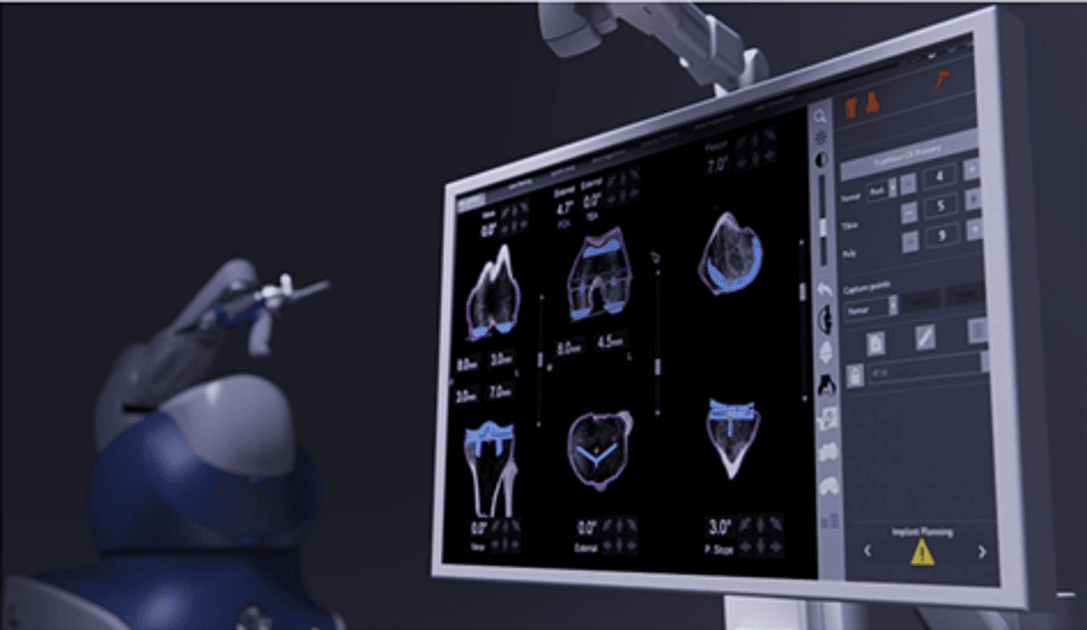
Stryker (SYK US) is one of the world's leading medical technology companies, operating across orthopedics, robotic surgery, neurotechnology, endoscopy, and hospital medical equipment. The company holds a strong position in the joint replacement implant market and is the leader in robotic orthopedic surgery through its Mako platform.
Mako is Stryker's robotic-assisted surgical platform designed for knee, hip, and shoulder replacement procedures. The system combines a patient-specific 3D joint model, preoperative planning software, and a robotic arm with haptic feedback, helping surgeons position implants more accurately while reducing the risk of damage to healthy tissue. For Stryker, Mako is a key growth driver, as each installed system typically generates recurring revenue from implant sales and disposable products over many years.
In addition to expanding the Mako ecosystem, the company is actively launching new products, including Mako 4, Mako Shoulder, and the more affordable Mako RPS robotic platform, which is designed for ambulatory surgery centers. Another important growth catalyst is the recent acquisition of Inari Medical and Amplitude Vascular Systems, which strengthens Stryker's presence in the fast-growing vascular intervention market and provides exposure to the emerging field of intravascular lithotripsy (IVL).
Key risks include a potential slowdown in elective surgical procedures, reduced capital spending by hospitals, increasing competition from other orthopedic implant manufacturers and robotic surgery providers, delays in the commercialization of new products, and challenges associated with integrating acquired businesses.
Investing through ETFs
Investors can gain exposure to the robotics and Physical AI market not only through individual companies but also through thematic ETFs. Below is a list of selected funds focused on these themes.
- Global X Robotics & Artificial Intelligence ETF (BOTZ US)
A global ETF focused on robotics, artificial intelligence, and autonomous systems. BOTZ currently sits at the intersection of traditional industrial robotics and the emerging investment theme of AI and humanoid robots. Its holdings include established leaders in automation and robotics such as Fanuc, ABB, Keyence, and Intuitive Surgical, as well as newer companies operating in AI and robotics. Among the fund’s more aggressive growth-oriented positions are Serve Robotics, Horizon Robotics, and other companies involved in autonomous systems.
BOTZ is significantly more concentrated than ROBO and has a stronger focus on artificial intelligence, autonomous driving, humanoid robots, and Physical AI. It is arguably the most balanced global ETF for investors seeking exposure to both AI and robotics growth trends, but it is also more volatile due to its higher concentration and larger allocation to fast-growing companies.
ETF Liquidity (average daily trading volume over the last 20 trading days, as of June 12, 2026): $44 million
- Robo Global Robotics & Automation Index ETF (ROBO US)
A global ETF focused on industrial robotics and automation. ROBO remains one of the purest investment vehicles for gaining exposure to robotics infrastructure and industrial automation. Its portfolio is primarily composed of manufacturers of industrial robots, motion control systems, automation components, machine vision technologies, and robotics equipment.
The fund’s largest holdings currently include Harmonic Drive Systems, Infineon Technologies, Ambarella, Hiwin Technologies, and Fanuc. One of ROBO's key characteristics is its high level of diversification and substantial exposure to mid-cap Japanese, Taiwanese, and European companies that serve as critical suppliers to the global robotics industry.
Compared with other robotics ETFs, ROBO is less exposed to the AI hype cycle and mega-cap technology companies, and more focused on the underlying infrastructure that powers industrial automation.
ETF Liquidity (average daily trading volume over the last 20 trading days, as of June 12, 2026): $29 million
- iShares Automation & Robotics UCITS ETF (RBOT LN)
A global ETF focused on automation and AI infrastructure. Unlike ROBO, this fund is significantly more tilted toward semiconductors, computing infrastructure, and large technology companies. Its largest holdings currently include Intel, AMD, Advantest, KLA, and other manufacturers of semiconductor chips and semiconductor equipment.
In essence, RBOT combines exposure to automation, AI infrastructure, and the semiconductor industry. Among the ETFs discussed here, it appears to be the most institutional and conservative option, with a greater weighting toward profitable large-cap companies that generate stable cash flows and less exposure to speculative robotics firms.
Its exposure to humanoid robotics is largely indirect, primarily through AI chips and industrial automation infrastructure.
ETF Liquidity (average daily trading volume over the last 20 trading days, as of June 12, 2026): $3 million
- Global X China Robotics & AI ETF (2807 HK)
This ETF is specifically focused on China's AI ecosystem, the modernization of Chinese industry, Physical AI, autonomous driving, and humanoid robotics. Its largest holdings include Han’s Laser, HGTECH, Shenzhen Inovance Technology, Baidu, and Hikvision.
ETF Liquidity (average daily trading volume over the last 20 trading days, as of June 12, 2026): $1 million.