
Deglobalization, population aging, debt growth, digitalization, and electrification remain the key structural trends to consider for longterm investment strategies. In the short term, markets remain uncertain as they await the consequences of USA policies.
Currently, stock markets are experiencing significant uncertainty and volatility due to geopolitical and macroeconomic factors. In such conditions, we believe it is essential to prioritize long-term structural trends. We can highlight 5 major trends that played a significant role in the global economy in 2024 and, in our view, will continue to influence stock markets in the near future: deglobalization, population aging, debt growth, digitalization, and electrification. These trends are interconnected but can simultaneously have divergent impacts on the global economy.
Deglobalization and geopolitical tensions
In recent years, the world has witnessed deglobalization driven by the pandemic, the prioritization of national interests, and geopolitical tensions. These factors have contributed to the rise of protectionism, trade barriers, and the restructuring of global supply chains.
Protectionism is an economic policy with the intent of protecting the domestic market from competition by foreign goods and services.
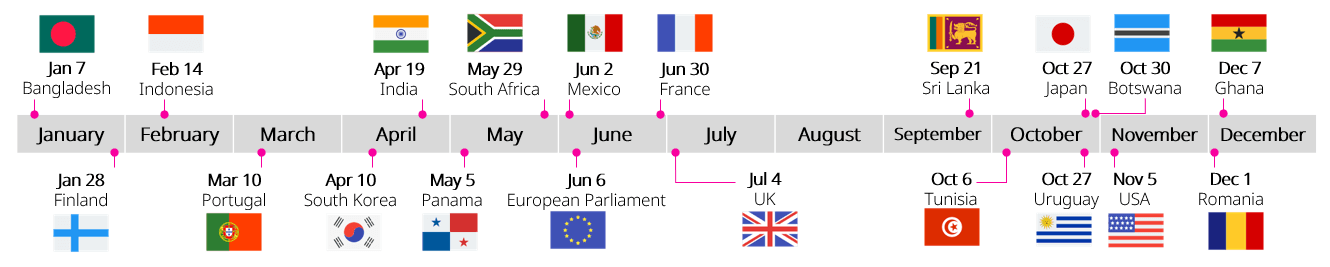
In 2024, elections were held in many countries. As a result, several nations either experienced a change in leadership or the ruling party, or the support for the ruling party weakened, partly due to voter dissatisfaction with rising prices and immigration issues. The desire for political and economic change, along with competition for resources and technologies, may continue to be a driving force in 2025.
Elections in 2024
 The competition between the United States and China has become particularly pronounced in strategic sectors such as advanced technologies and artificial intelligence. The policy measures proposed by the new US administration (including tax cuts, deregulation in certain economic sectors, and increased import tariffs) could boost economic activity in the USA in the short term but may negatively impact global economic growth.
As it remains unclear what specific protective measures the new US administration will implement and how other countries will respond, there is significant uncertainty about which economies will be affected and to what extent. Besides China, the risk of a trade war could also impact developed countries (such as Canada and European nations) as well as developing ones (e.g., Mexico). During the inauguration, US President Donald Trump announced plans to impose tariffs of up to 25% on Mexico and Canada by February 1. He later commented that his team is considering a 10% tariff on China starting February 1, which is, however, substantially lower than the 60% promised during his election campaign. It will also be crucial to monitor the countermeasures taken by these countries.
The competition between the United States and China has become particularly pronounced in strategic sectors such as advanced technologies and artificial intelligence. The policy measures proposed by the new US administration (including tax cuts, deregulation in certain economic sectors, and increased import tariffs) could boost economic activity in the USA in the short term but may negatively impact global economic growth.
As it remains unclear what specific protective measures the new US administration will implement and how other countries will respond, there is significant uncertainty about which economies will be affected and to what extent. Besides China, the risk of a trade war could also impact developed countries (such as Canada and European nations) as well as developing ones (e.g., Mexico). During the inauguration, US President Donald Trump announced plans to impose tariffs of up to 25% on Mexico and Canada by February 1. He later commented that his team is considering a 10% tariff on China starting February 1, which is, however, substantially lower than the 60% promised during his election campaign. It will also be crucial to monitor the countermeasures taken by these countries.
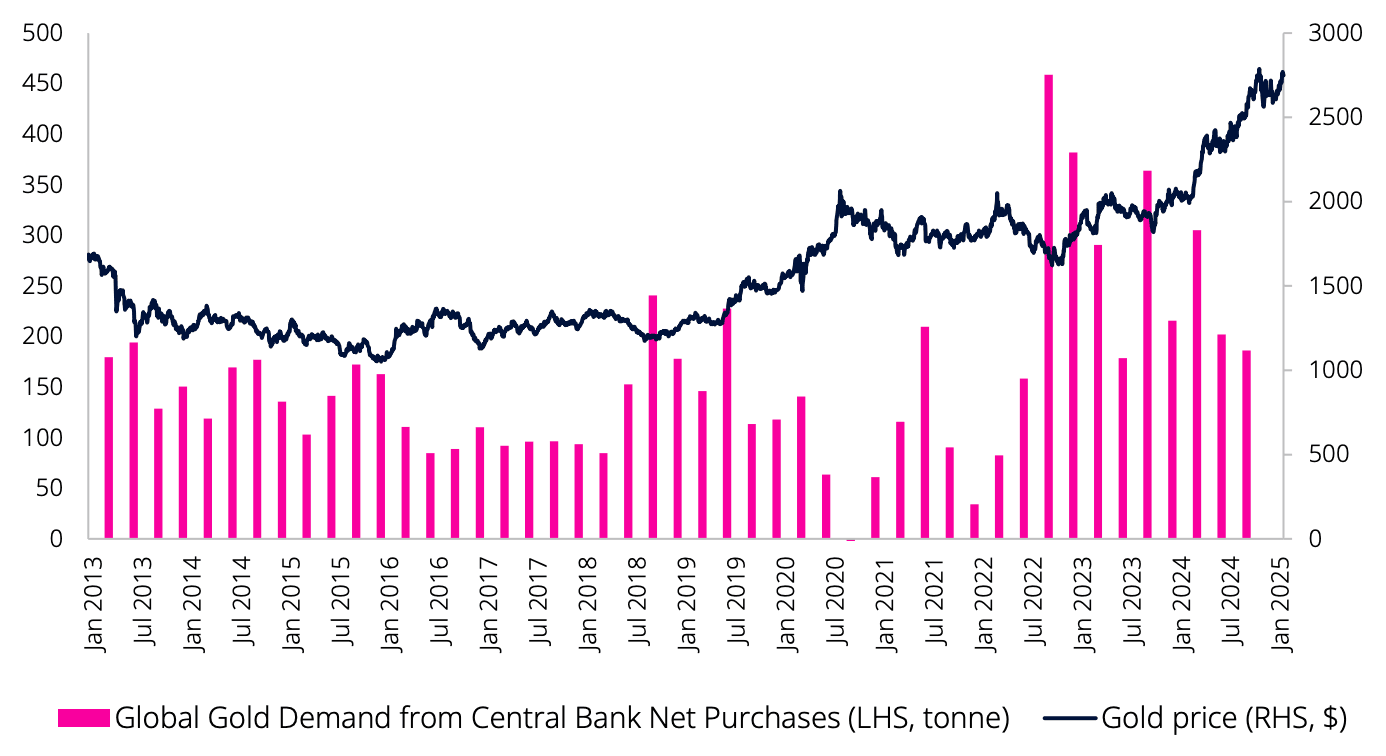
The shift of the global economy away from globalization also** impacts the role of reserve currencies**. The division of the world into competing blocs and the use of sanctions as a political tool are encouraging countries to diversify their reserves and increase investments in gold.
Demand for Gold from central banks and its price
 Assets in focus:
-
In 2024, gold was one of the best-performing investment assets, showing a 27% price increase. Gold might remain in demand in 2025 due to geopolitical risks and reserve diversification, but its price growth prospects are more modest. Investments in gold are better suited as a defensive element of a portfolio for long-term investments. Gold ETFs:
-
Alternatively, as an asset that does not correlate with others over the long term, a small portion of the portfolio (e.g., no more than 5%) can be allocated to cryptocurrency. Keep in mind that cryptocurrency is a highly volatile asset. ETFs related to cryptocurrency:
As geopolitical tensions rise, countries focus on cyber and national security, leading to potential growth in the stock prices of companies within these sectors. Stocks of companies in the cybersecurity sector:
ETFs on stocks of companies in the cybersecurity sector:
-
iShares Cybersecurity and Tech ETF (IHAK)
-
First Trust Nasdaq Cybersecurity ETF (CIBR)
-
The US stock market delivered high returns in 2024 (the S&P 500 index posted a 25% return), outperforming emerging market indices (the MSCI Emerging Markets index returned 8%). At the same time, from a fundamental perspective (e.g., considering the price-to-earnings ratio of companies), USA stock valuations are already quite high. Additionally, there is concern about the concentration of market capitalization in just 7 issuers. Investments in the USA stock market may remain attractive but with expectations of more modest returns this year. The "Magnificent Seven": Alphabet (Google), Amazon, Apple, Meta Platforms, Microsoft, Nvidia, and Tesla. Although the S&P 500 comprises 500 companies, these 7 stocks recently accounted for more than one-third of the index. In 2014, the market capitalization of these tech giants was around 10% of the index’s capitalization. Currently, this share has exceeded 35%. The index's high exposure to these 7 stocks may pose a challenge for investors, as it increases portfolio risk. Additionally, the Magnificent Seven all operate within the same industry — the IT sector. The share of the "Magnificent Seven" in the S&P 500 capitalization
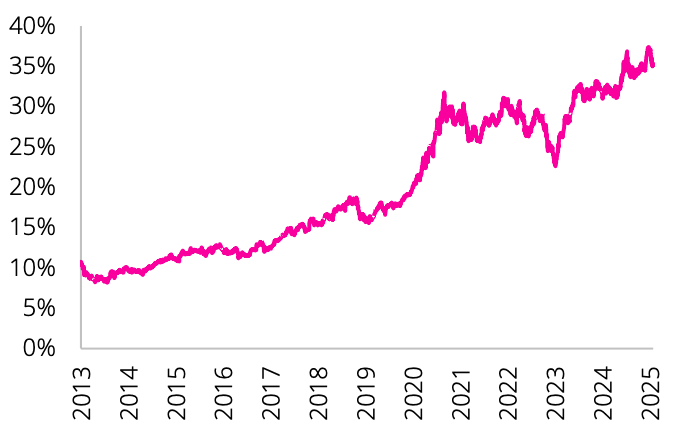 Source: Bloomberg (January 27, 2025), Sirius Capital
The price-to-earnings ratio (P/E ratio) of S&P 500 companies based on their expected earnings*
Source: Bloomberg (January 27, 2025), Sirius Capital
The price-to-earnings ratio (P/E ratio) of S&P 500 companies based on their expected earnings*
*
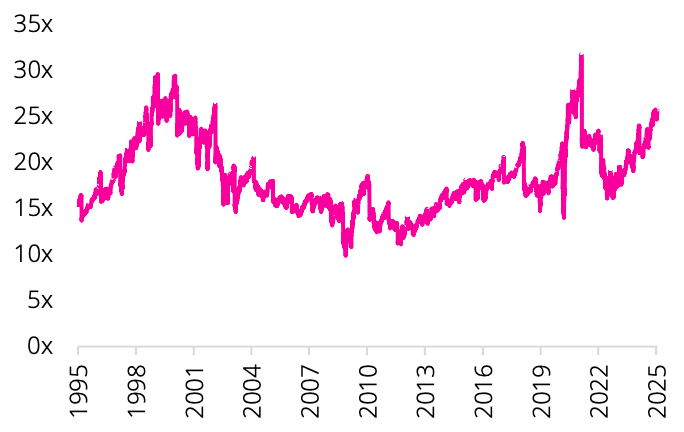 Source: Bloomberg (January 27, 2025), Sirius Capital
ETFs on U.S. Market Stocks:
Source: Bloomberg (January 27, 2025), Sirius Capital
ETFs on U.S. Market Stocks:
-
iShares Core S&P 500 UCITS ETF USD (IDUS pays dividends, CSPX reinvests), covers the 500 largest companies.
-
Invesco S&P 500 UCITS ETF (SPXS), covers the 500 largest companies.
-
iShares Core S&P Total U.S. Stock Market ETF (ITOT), covers the entire USA stock market.
-
iShares Core S&P Small-Cap ETF (IJR), covers small-cap companies.
-
For portfolio diversification (to avoid concentrating all investments in the USA market), we recommend considering ETFs focused on markets in Japan, Indonesia, India, and Middle Eastern countries. Investments in these economies, in our view, carry a lower risk of negative consequences from USA policies, though uncertainty remains. ETFs on Japanese market stocks:
- WisdomTree Japan Hedged Equity Fund (DXJ)
- iShares MSCI Japan ETF (EWJ)
- Franklin FTSE Japan ETF (FLJP)
- Vanguard FTSE Japan UCITS ETF (VJPN) ETFs on Indian market stocks:
- Franklin FTSE India ETF (FLIN)
- iShares MSCI India ETF (INDA) ETFs on Indonesian market stocks:
- iShares MSCI Indonesia ETF (EIDO) ETFs on Saudi Arabian and UAE market stocks:
- iShares MSCI Saudi Arabia ETF (KSA)
- iShares MSCI UAE ETF (UAE)
The Chinese market appears to be one of the most vulnerable in light of the anticipated tariffs from the USA. Another critical issue for China is whether the government can stabilize domestic activity. However, as the Chinese government takes measures to stimulate the economy and mitigate the impact of Trump’s tariffs, investments in this market may present an interesting opportunity (albeit with high risk). ETFs on Chinese market stocks:
- iShares MSCI China ETF (MCHI)
##Population aging in developed economies
Population aging is becoming one of the key factors limiting labor supply and potential economic growth. Without significant productivity improvements, such as through the adoption of artificial intelligence, this will constrain economies' ability to produce and grow. In some countries, like the USA, rising immigration has temporarily mitigated this effect, but this solution may only be short-term.
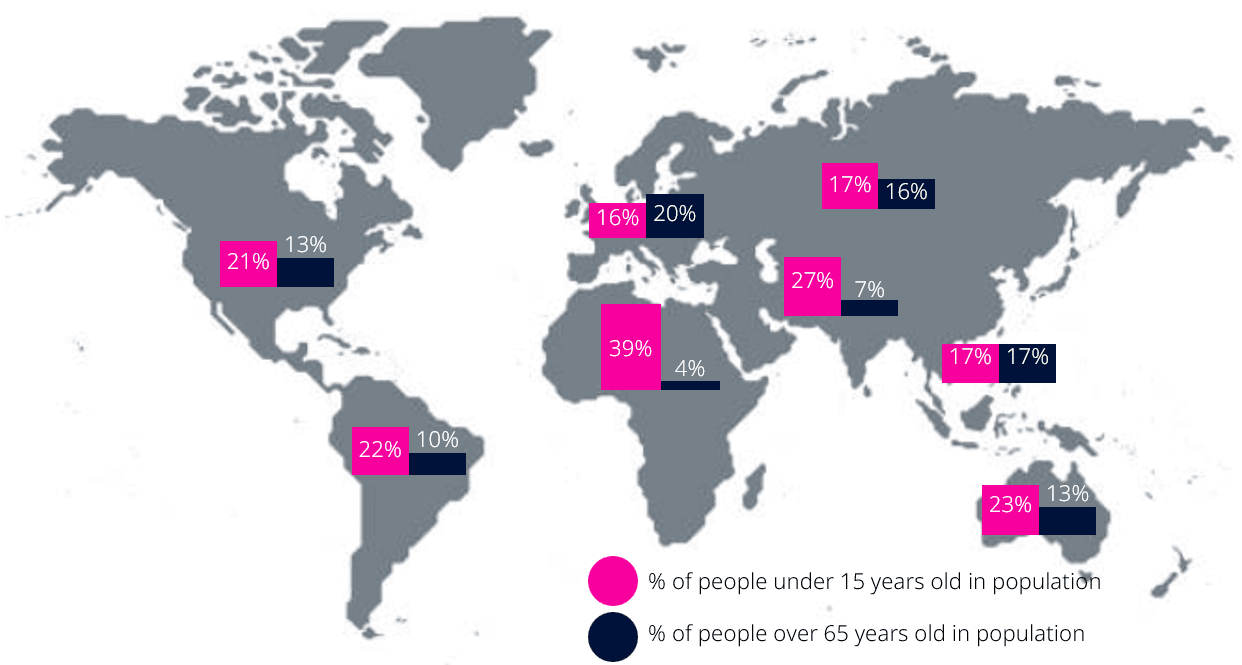
Since the beginning of the decade, we have already observed significant changes in demographic trends. According to the UN, over the past 5 years, the population aged 65 and older has grown by approximately 100 million people. This trend, particularly pronounced in the USA, Europe, and Northern Asia, is accompanied by the growth of younger populations in Africa and South Asia.
Given the aging populations in developed markets and the increased focus on health preservation, we believe it is worth paying attention to opportunities in innovations aimed at extending life expectancy and improving the quality of aging.
The ratio of people under 15 and over 65 in the population
Assets in focus:
ETFs on USA companies producing medical equipment:
- iShares U.S. Medical Devices ETF (IHI)
USA companies in the healthcare sector:
USA companies in the biotechnology sector:
- iShares Biotechnology ETF (IBB)
ETFs on stocks of major global healthcare companies:
- iShares iShares Global Healthcare ETF (IXJ)
Debt growth and inflation risk
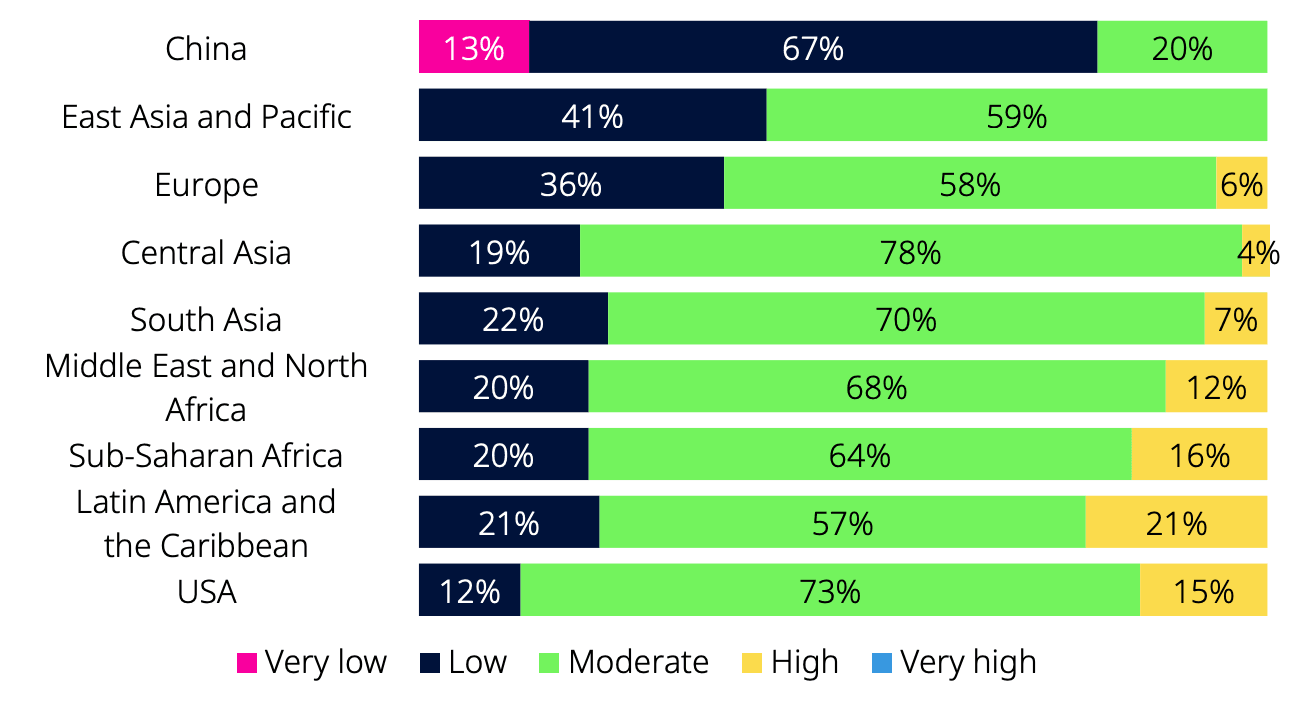
Despite signs of a recession (i.e., a decline in economic activity) in the USA and other countries, the global economy continued to grow in 2024. By the end of 2024, inflation in the USA began to decline without a significant slowdown in economic growth. This created conditions for the Federal Reserve to lower interest rates, boosting optimism in the stock market. The European Central Bank also started reducing rates in mid-2024. The IMF forecasts a decrease in the global average annual inflation rate to 4.3% in 2025 compared to 6.7% in 2023 and 5.8% in 2024. However, inflationary risks remain. Restrictions on migration and a shrinking labor supply may intensify inflationary pressures. The anticipated increase in tariffs by the USA could further drive inflation within the country and negatively impact global growth. Intensifying protectionist measures and disruptions in supply chains caused by geopolitical conflicts also contribute to rising transportation costs and temporary inflation spikes.
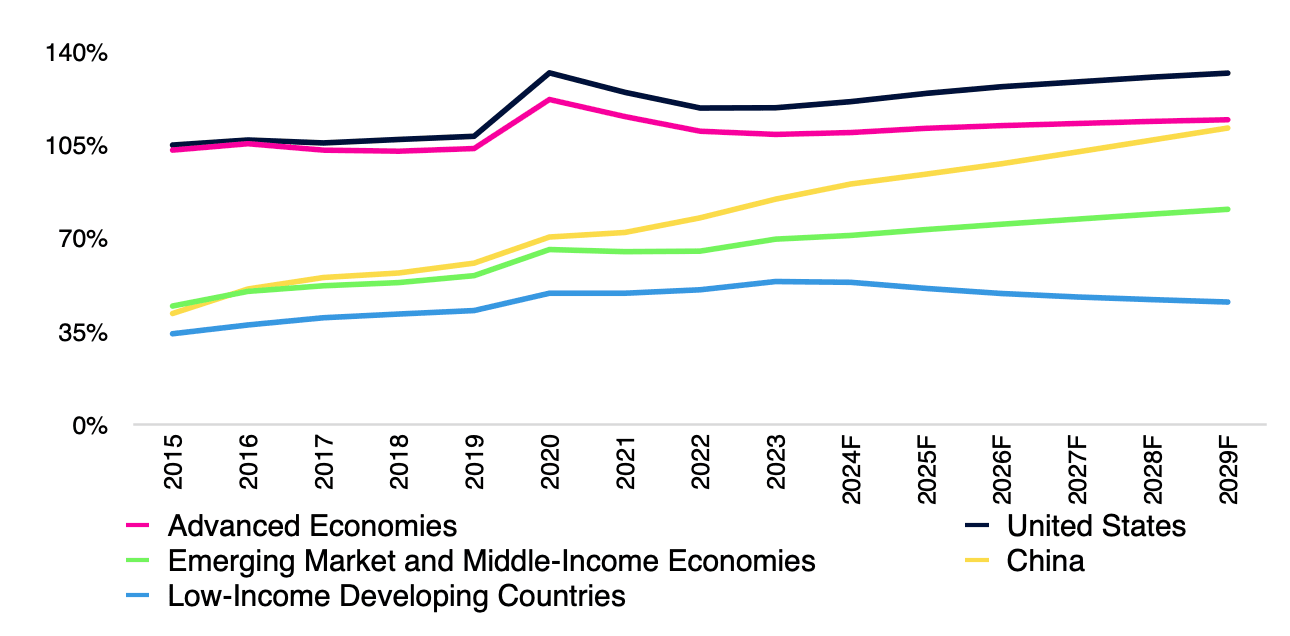
The global level of public debt is high and, according to the IMF, is expected to exceed $100 trillion in 2024. After declining in 2021–2022, global public debt rose again in 2023 and is projected to approach 100% of global GDP by 2030, with the two largest economies, China and the United States, significantly contributing to this growth. Although the IMF forecasts that debt will stabilize or decrease in about two-thirds of countries by 2029, it remains above pre-pandemic levels.
Economists' inflation expectations across regions in 2025
Debt-to-GDP ratio
US dollar bonds yields
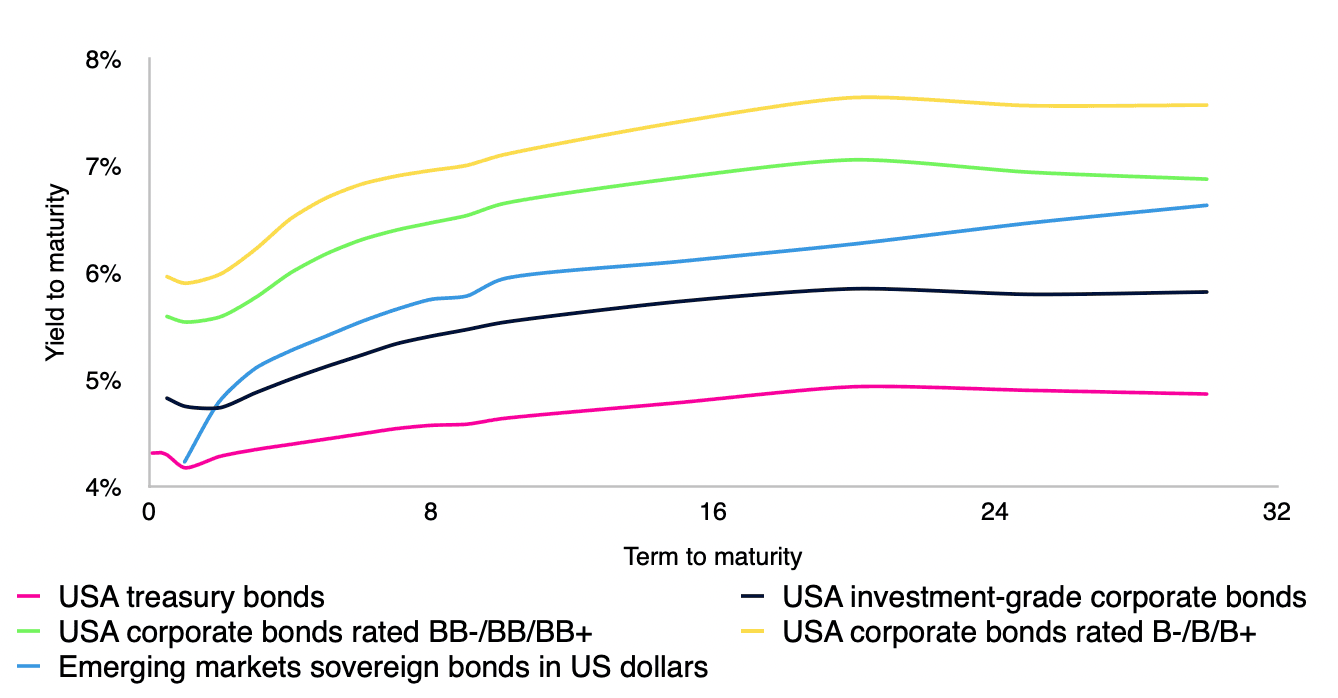
The yield to maturity (YTM) of a bond is the annual rate of return assuming the investor holds the bond until its maturity date and receives all remaining coupon payments as well as the repayment of the principal (face value) at maturity. Rating agencies assign ratings to bonds, assessing their credit quality (ranging from defaulted bonds rated D to bonds of extremely high-quality rated AAA). Bonds rated BBB- or higher are considered "investment grade". Bonds with lower ratings (i.e., BB+ and below) are considered "speculative" and are sometimes referred to as "high-yield" or "junk" bonds. The current yields on US dollar bonds (particularly US treasury bonds) are attractive compared to their historical levels. In the baseline scenario, the Federal Reserve is expected to continue gradually lowering the key rate (which would lead to rising bond prices and declining yields). However, bond price volatility may persist amid uncertainty regarding US policy.
Adoption of artificial intelligence
Markets are just beginning to realize the potential of artificial intelligence (AI). This technology can be applied across various industries, creating both new risks and investment opportunities. The commercial effects of AI adoption are diverse, ranging from accelerating drug development in healthcare to reducing costs in the financial sector. The widespread application of AI across industries has the potential to transform the economy: it can lead to the emergence of new business models, increase labor productivity similar to the introduction of computers and the Internet, and reduce inflation. At the same time, the active use of AI may increase cybersecurity risks and raise the need for large-scale workforce reskilling.
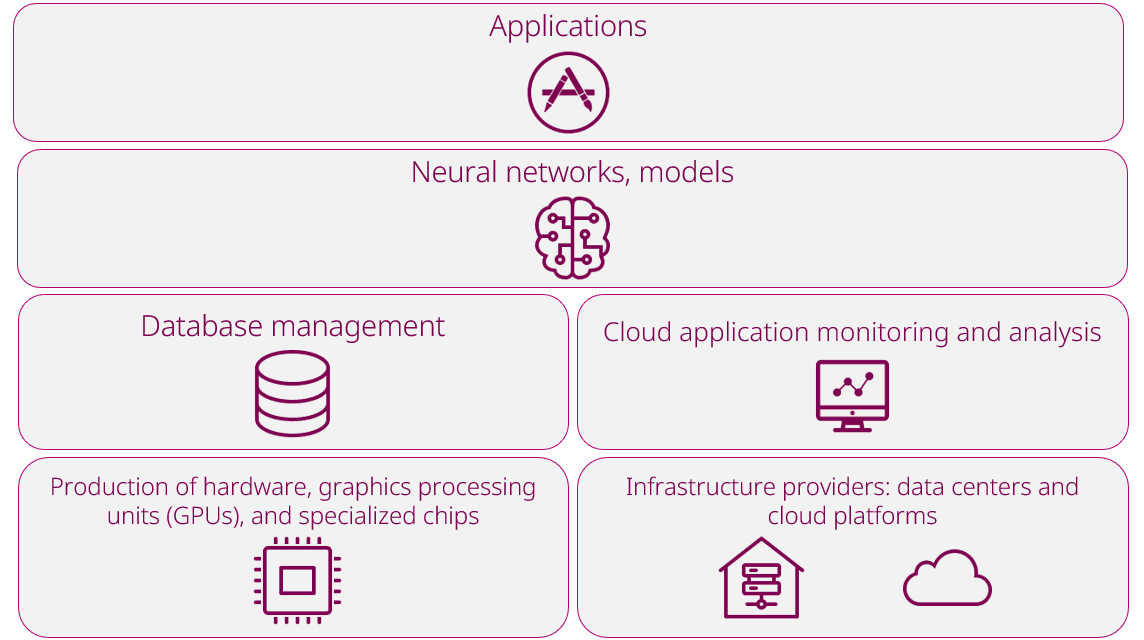
The AI market landscape spans several interconnected levels — from hardware manufacturing to software development and services. At the current stage of AI development, significant attention is paid to infrastructure: substantial investments are needed in data centers, chips, and energy supply systems. When investing in this trend, it is essential to look "under the hood" and focus on the companies enabling this development.
The AI market landscape
Assets in focus:
-
Hardware Manufacturers (Chips). The high computational demands of AI require specialized hardware for training and deploying models. Key players in this segment include:
-
Data centers:
-
Snowflake (SNOW): a cloud-based data storage platform used for data processing in AI.
-
Databases and data management platforms provide efficient storage, processing, and retrieval of data.
- MongoDB (MDB): a NoSQL database optimized for unstructured AI data.
-
Monitoring and analytics:
-
ServiceNow (NOW): оa cloud platform offering tools for IT service management and business process automation.
-
Major IT companies like Alphabet (GOOGL), Microsoft (MSFT), Amazon (AMZN), Oracle (ORCL), Alibaba (BABA), IBM (IBM), Salesforce (CRM), Cognizant (CTSH) also provide a range of services supporting AI infrastructure development.
-
ETFs:
- Global X Artificial Intelligence & Technology ETF (AIQ) invests in companies that potentially stand to benefit from the further development and utilization of AI technology in their products and services, as well as in companies that provide hardware facilitating the use of AI for the analysis of big data.
- Global X Data Center & Digital Infrastructure ETF (DTCR) invests in companies that operate data centers and other digital infrastructure supporting the growth of communication networks.
- Defiance Quantum ETF (QTUM) invests in companies whose products or services are primarily related to developing quantum computing and machine learning technologies.
Electrification
The growing energy demand, driven by the increasing number of data centers, industrial electrification, and the expansion of electric vehicles, requires substantial investments in energy and infrastructure.
The energy transition is a major structural shift in energy supply and consumption. Currently, the transition is focused on sustainable energy to mitigate climate change.
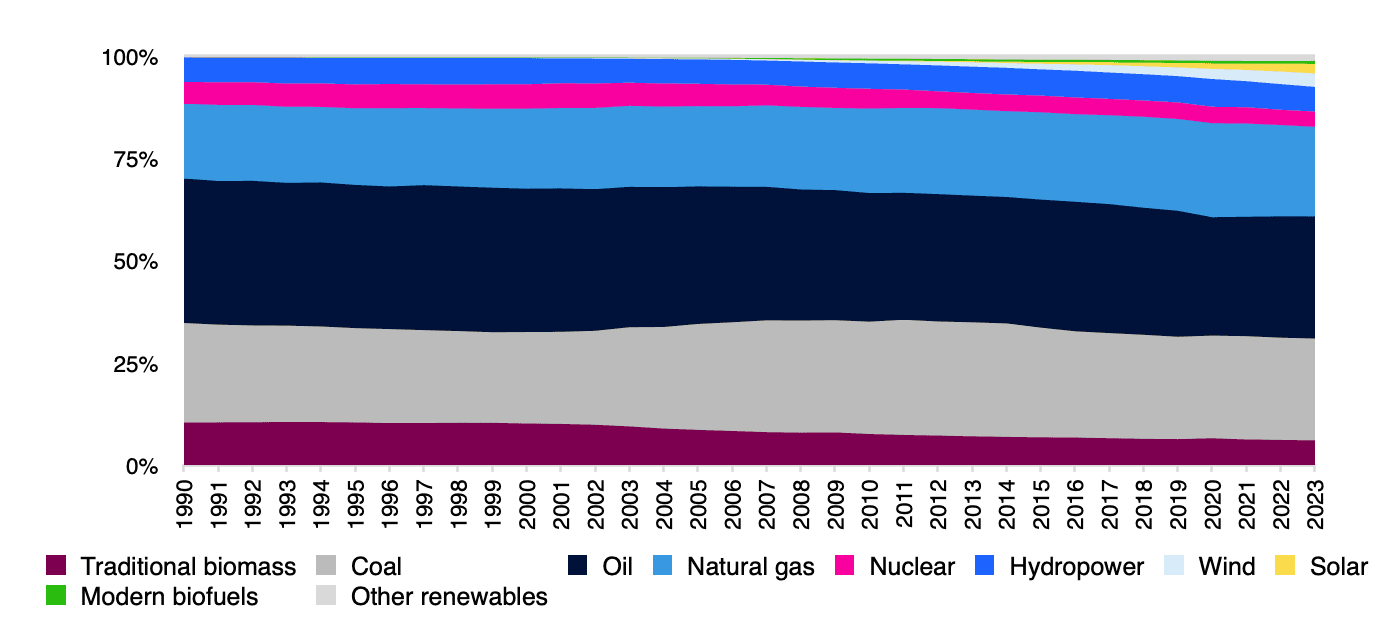
At the same time, the focus of the largest economies until recently has been on the energy transition, which has driven the development of low-carbon energy sources. The share of renewable energy in the global energy mix has gradually increased in recent years, while the importance of fossil fuels has declined. We believe that, in the long term, growth in solar, wind, hydrogen, and nuclear energy can be expected. In the short term, we consider investments in nuclear energy to be the most reliable.
Global primary energy consumption by source
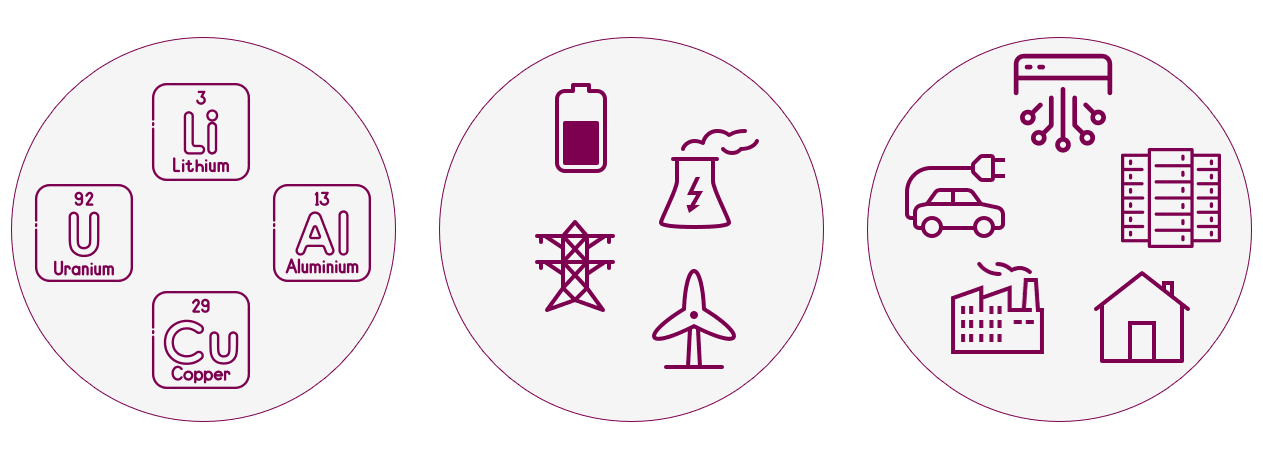
 Electrification and renewable energy drive demand for metals, which are key components of electrical systems and "green" technologies. Investors can gain exposure to these commodities through ETFs, derivatives (futures), or shares of mining companies. The most important raw materials for the energy transition include: Lithium, Nickel, Cobalt, Copper, Iridium, Aluminum, Zinc, Tin, Silver, Platinum, Rare earth elements
We believe that the entire electrification value chain might be interesting for investors, including investments in raw materials, energy generation/storage/transmission/distribution, and energy consumption (e.g., through data centers and vehicles).
 At the same time, deglobalization and growing protectionism create risks of geopolitical conflicts and economic sanctions related to the competition for resources and technologies needed for the energy transition. The shifting focus of USA policy should also be considered. Under Joe Biden's administration, the USA actively participated in the global ESG agenda and increased the attractiveness of the domestic market for green technology manufacturers through subsidies and tax incentives. Under Donald Trump’s presidency, the USA may significantly slow down decarbonization and, in the short term, prioritize hydrocarbon fuels (oil and gas).
Assets in focus:
At the same time, deglobalization and growing protectionism create risks of geopolitical conflicts and economic sanctions related to the competition for resources and technologies needed for the energy transition. The shifting focus of USA policy should also be considered. Under Joe Biden's administration, the USA actively participated in the global ESG agenda and increased the attractiveness of the domestic market for green technology manufacturers through subsidies and tax incentives. Under Donald Trump’s presidency, the USA may significantly slow down decarbonization and, in the short term, prioritize hydrocarbon fuels (oil and gas).
Assets in focus:
ETFs on metals/companies related to metals in high demand for the energy transition:
- WisdomTree Copper (COPA) invests in copper futures.
- Global X Copper Miners ETF (COPX) provides investors access to a broad range of copper mining companies.
- Global X Lithium & Battery Tech ETF (LIT) invests in the full lithium cycle, from mining and refining the metal, through battery production.
- VanEck Rare Earth and Strategic Metals ETF (REMX) invests in stocks of mining companies based in the USA, China, and Australia that mine and process rare earth and strategic metals.
Stocks of U.S. companies focused on nuclear energy:
ETFs on uranium and nuclear industry development:
- Global X Uranium ETF (URA) provides investors access to a broad range of companies involved in uranium mining and the production of nuclear components, including those in extraction, refining, exploration, or manufacturing of equipment for the uranium and nuclear industries.
ETFs on the USA oil and gas sector:
- Energy Select Sector SPDR Fund (XLE)
The assets mentioned in this review can be purchased through the Sirius Capital app! Invest with Sirius Capital!